

👋 Hey there, I’m Illai. Every day, I share with readers questions, insights and learnings about building startups, venture capital, Artificial Intelligence and entrepreneurial career paths. You can find more: Illai’s Linkedin | My Website | Fundraising with AI Workshops | ZIZO Product Course | Between App
Paid Subscribers will get exclusive access to more articles and insights, get an invite to my community and will get discounts for workshops and advisory. Subscribe Today.
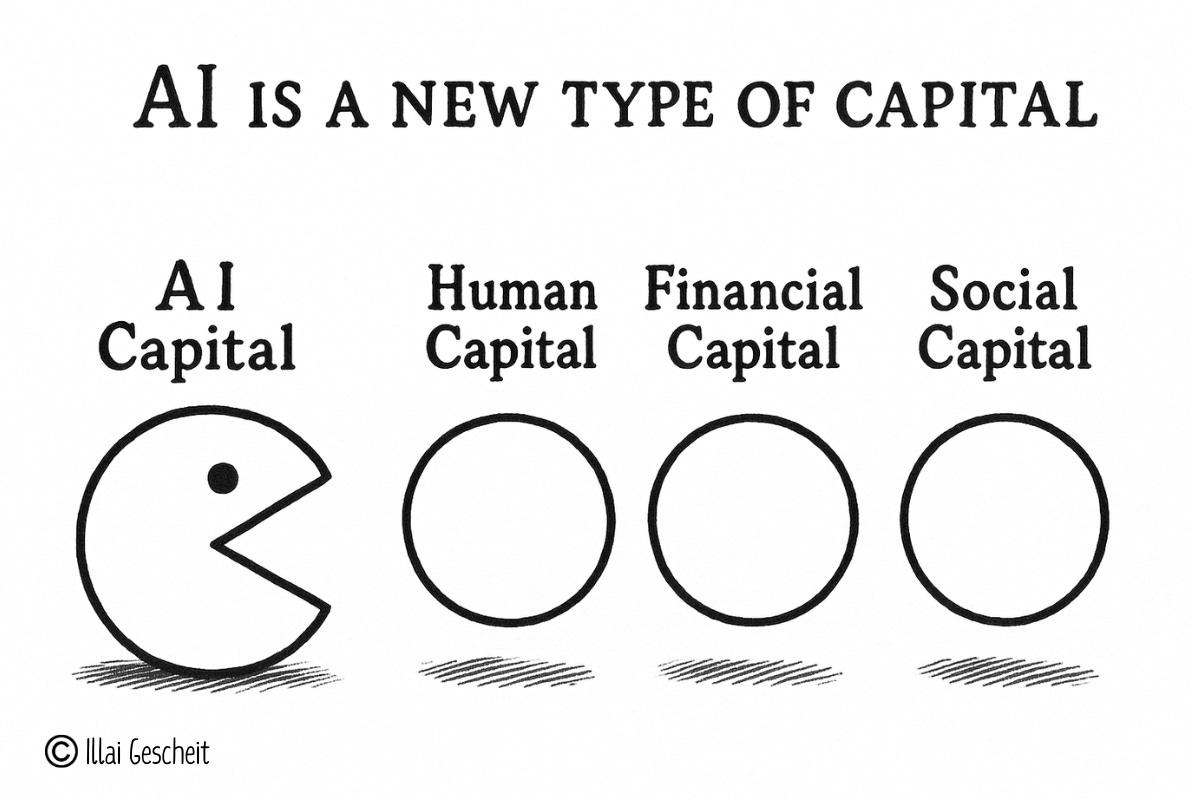
I want you to think of AI as a new type of capital - “Intelligence Capital”.
Most of us think of Artificial Intelligence and the opportunities it brings as new technology, or even a business and industry. That is probably true in the direct sense, as this is how it was developed and emerged from the practices of Machine Learning and Neural Networks and evolved into human engaging products like ChatGPT, Perplexity and other conversational AI platforms, AI agents or even robots powered by AI.
In my deep work I do across different side of the table of AI including building companies, advising and investing in AI companies, I want to propose a totally different perspective and mental model for AI. This mental model of “Intelligence Capital” is going to change the way entrepreneurs and founders are going to build, fund and scale startups and other businesses. It is going to change how venture capitalists are evaluating companies as they do their due diligence. It also going to change the way CEOs of established large corporation look at AI transformation of their companies, and workforce to move faster and become disruptive forces themselves - AI is a new type of capital.
If you think about traditional types of capital value was stored in gold, land and property. With “Intelligence Capital” the value is stored in AI models and applications. If with Human Capital we struggled to find the conversion or comparison to cash equivalent, the conversion of “Intelligence Capital” to its monetary value is quite simple, in terms of costs of compute and infrastructure, time and efficiency.
The 3 types of capital
When I teach entrepreneurship and strategy, when I work with founders on building and scaling their ventures and with funds on building new thesis and sourcing deals, I typically build strategies and operating models around 3 different types of capital. Most founders and investors will have a narrow view on the most obvious type which focuses only on financial capital, the amount of cash that comes in and out of your business and the financial valuation of the company at the time of an investment event.
However, in a the high-risk venture space especially in the earlier stages, we need to adopt a broader about capital.
Human Capital
Bad CEOs treat people as labor, or simply workers, good CEOs and founders treat their people as assets or even as investments. Human Capital refers to the value that your people beholds within your organization. It includes the skills, experiences, thought leadership, ideas and creativity that the people within and around your business provide in the context of your business.
Because a CEO views his or her people as Human Capital, they would invest to increase its economic value and probably will approach it as a compounding investment over time - they might be building it as patient capital. A founder that appreciates Human Capital, will think from the very early days of investing in education of his or her employees, up-skilling them and will put mechanisms for team building to build and increase their business human capital value.
The concept of Human Capital is associated with Adam Smith (1776), who suggested that the acquired abilities of people are a form of capital. Until this day some will view the term as controversial and offensive as you compare people to a monetary value. Then in 1960, the term became more common and understood after Nobel Prize winners Gary Becker and Theodore Schultz, where they presented that you have to value the quality of labor and treat education as investment and not expense.
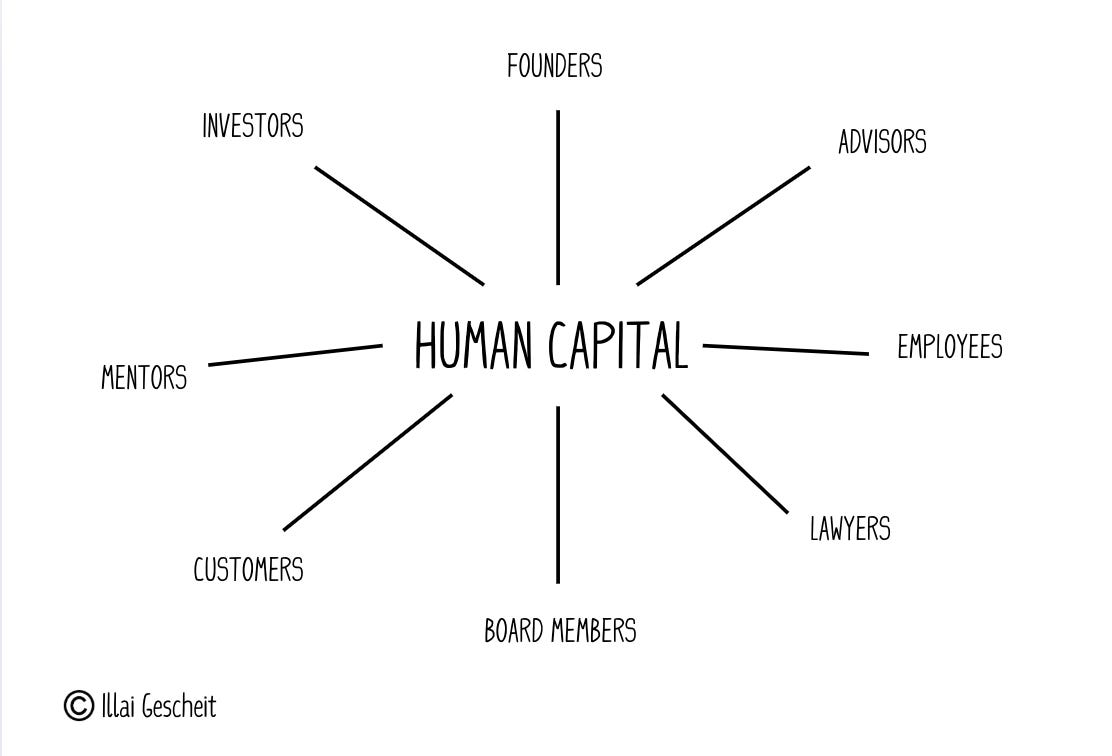
Founders that work with me, know that I see human capital in its broader sense. I include not only their employees but a their entire ecosystem of humans that support them in their entrepreneurial journey. Hiring the right people in the different stages of your company, could lead to an increase value of your company, to develop and move faster and build a great culture for your company. Adding the right investors, advisors and mentors is another element of the human capital that can increase your company value. Even thinking of your customers and partners as human capital, could go a long way, especially if they are strategic for your start of the company or for growth.
Financial Capital
Financial Capital is an obvious one. It is the way most of us think about company and business value that includes assets such as cash, credit, equity and other liquid resources. Every founder and CEO faces the questions of funding and fundraising in order to start a company and to support the growth of their company. Financial Capital fuels the resources of your company to keep it running and growing: you need to pay your employees every month, you need to pay to your cloud providers to host your data and pay for compute, you need to run adds to get visibility and convert to sales - money is important.
Some CEOs and Founders are so focused on the Financial Capital element that they forget their responsibility of managing their people, and building their networks and relationships (the other 2 types). I meet founders that 90% of their time goes to fundraising, and only 10% to building their company and team, and that usually ends up with challenges and issues that might not be able to repair as the company scale especially when the problem is culture.
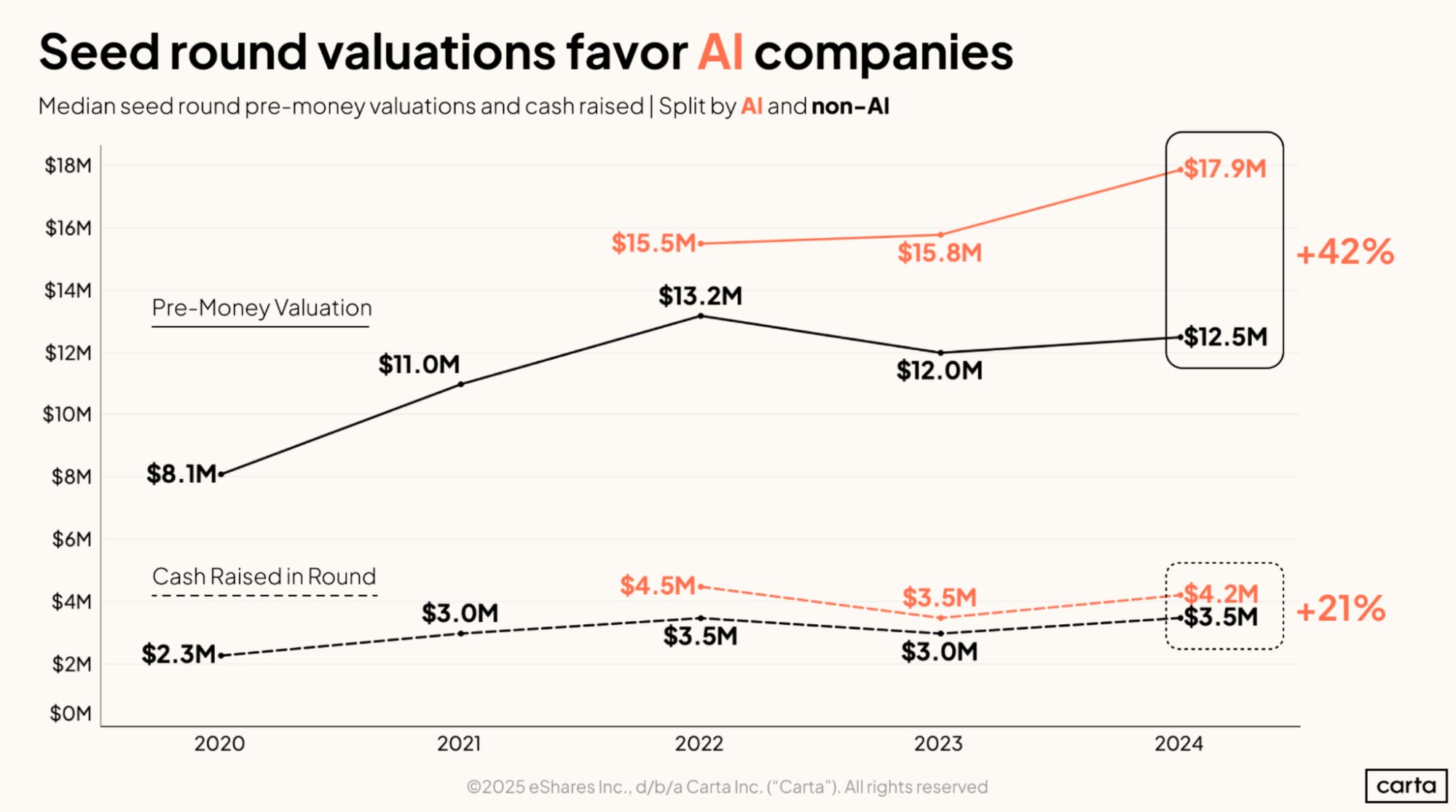
The fact that I am introducing a new type of capital with AI, doesn’t mean that companies are raising less money, on the contrary. Those companies who are building foundational models and AI application, are the ones that creating capital for the market and society, and their financial value is growing. According to Carta, “in 2024, the median pre-money valuation on seed rounds raised by AI startups was $17.9 million. That’s 42% higher than the median pre-money valuation among non-AI companies.”
The promise of that type of value creation is so large, that you see companies like Thinking Machine Labs which is founded by Mira Murati, the ex-CTO of OpenAi which raised $2 billion for a seed-round at $10 billion valuation.
Social Capital
Especially if you are a first time founder, or new to an industry, the network and relationships people will bring are extremely valuable assets for you personally and for your company. If you wish to gain both Human Capital and Financial Capital, who you know, and the trust they have in you could lead you to hire amazingly talented people and to attract venture capitalists and angel investors more quickly. Unlike, financial and human capital, social capital takes a long time to acquire, sometimes years (double digit).
I personally view my network of VCs, CVCs, founders and other startup and ecosystem leaders as one of my biggest assets. It took me over 20 years to build relationships with people across the US, Europe, UK, Israel and even in Asia to a level that I can quickly text someone with a great deal opportunity or put a good word for a founder I work with that people trust. That development of Social Capital required working together with people with no expectation for return for long periods of time. I offered guidance, help and mentoring pro-bono that helped evolved those relationships, CEOs and businesses.
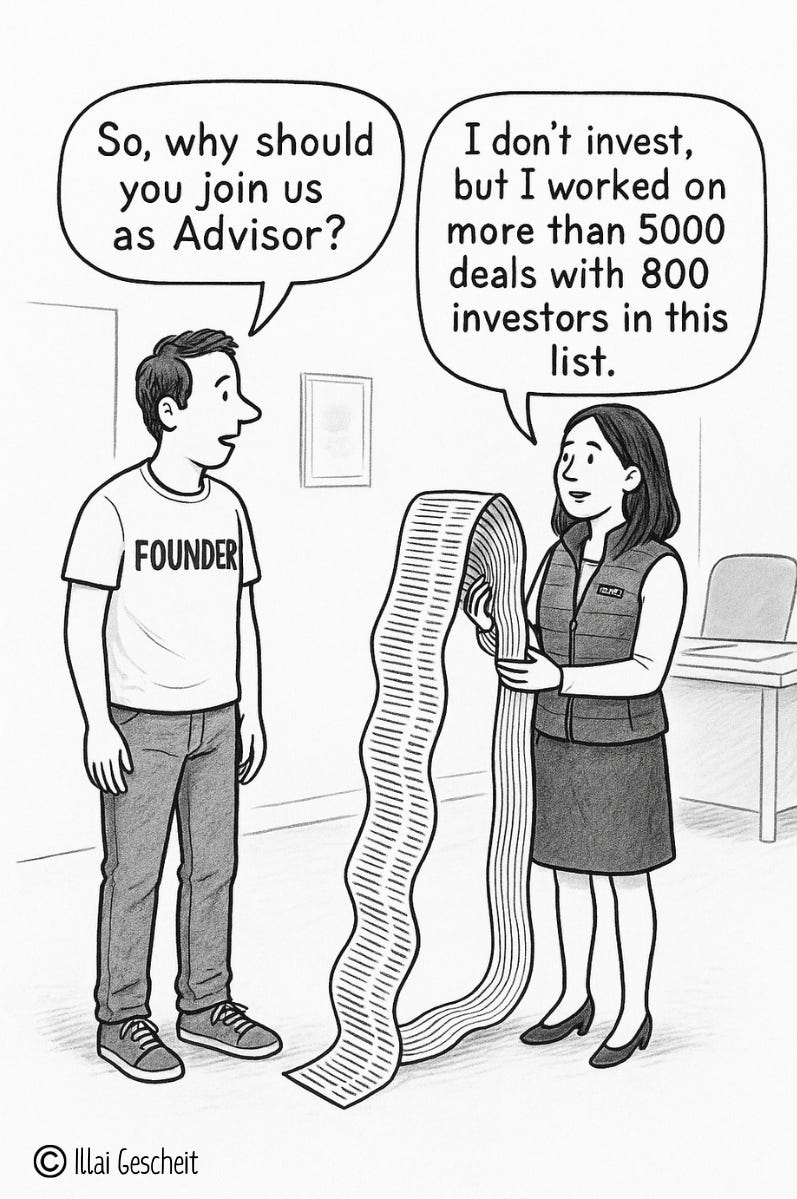
I had a case of a founder recently I mentored a few times, and once they raised capital, I mentioned that I would typically give a very warm intro to companies that I work with and know the founders well. Hence, if you are a part of my Advisor portfolio, that helps me build more conviction through my due diligence and the ongoing work. In that case, if I open my network and use my Social Capital, that could go a long way. However, if I do not know the founder there’s risk on my end that it would be not a good or valuable intro to my network that would risk my reputation and relationship built over years.
My point is that Social Capital is also capital at risk, and you need to acquire it and use it with care. It is based on trust and like a high-risk venture trust could fall apart quickly. As a founder, investing in building your own Social Capital by bringing on board human capital with that social capital that will build your own, is a key to success.
Which Capital do you need to succeed with your startup
I have not yet seen a founder, a CEO or a founding team that succeeded with only one type of capital. Having lots of cash in the bank can get you so much far in your journey, and having lots of connections without converting them into investments will leave you with many invites to events, but with no money to pay for employees, marketing campaigns and for your compute.
This triad of Talent, Money and Networks is a flywheel that if you build and work actively to build as both personal capital as founder and CEO your chances are increasing to make it valuable for your business building efforts.
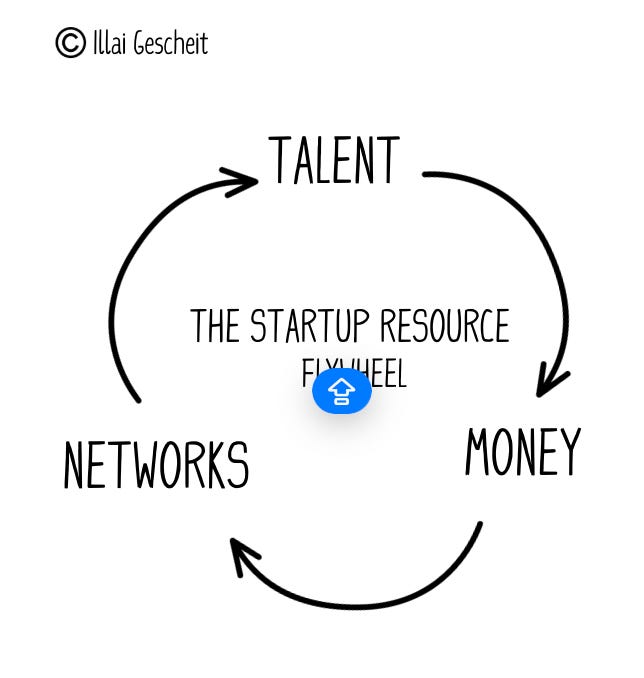
If a CEO or a startup founder keeps raising those three elements of capital, consistently and repeatedly, they will feed each other and create the momentum you need to grow to a $1B company or to have $100M in ARR.
What I find interesting is the inter-connection between the Startup Resources Flywheel and its direct contribution to build “Intelligence Capital”. Founders and CEOs have the opportunity today to focus carefully on directing their acquisition of Human, Social and Financial capital to grow their “Intelligence Capital”. Founders can build a strategy to bring the right Human Capital, Financial Capital and Social Capital, to build the right Intelligence Capital. That value will prevent the founder and the company to scale maybe in terms of headcount, or even raising significant capital and stay lean increasing company value while staying frugal based on the company “Intelligence Capital” mainly.
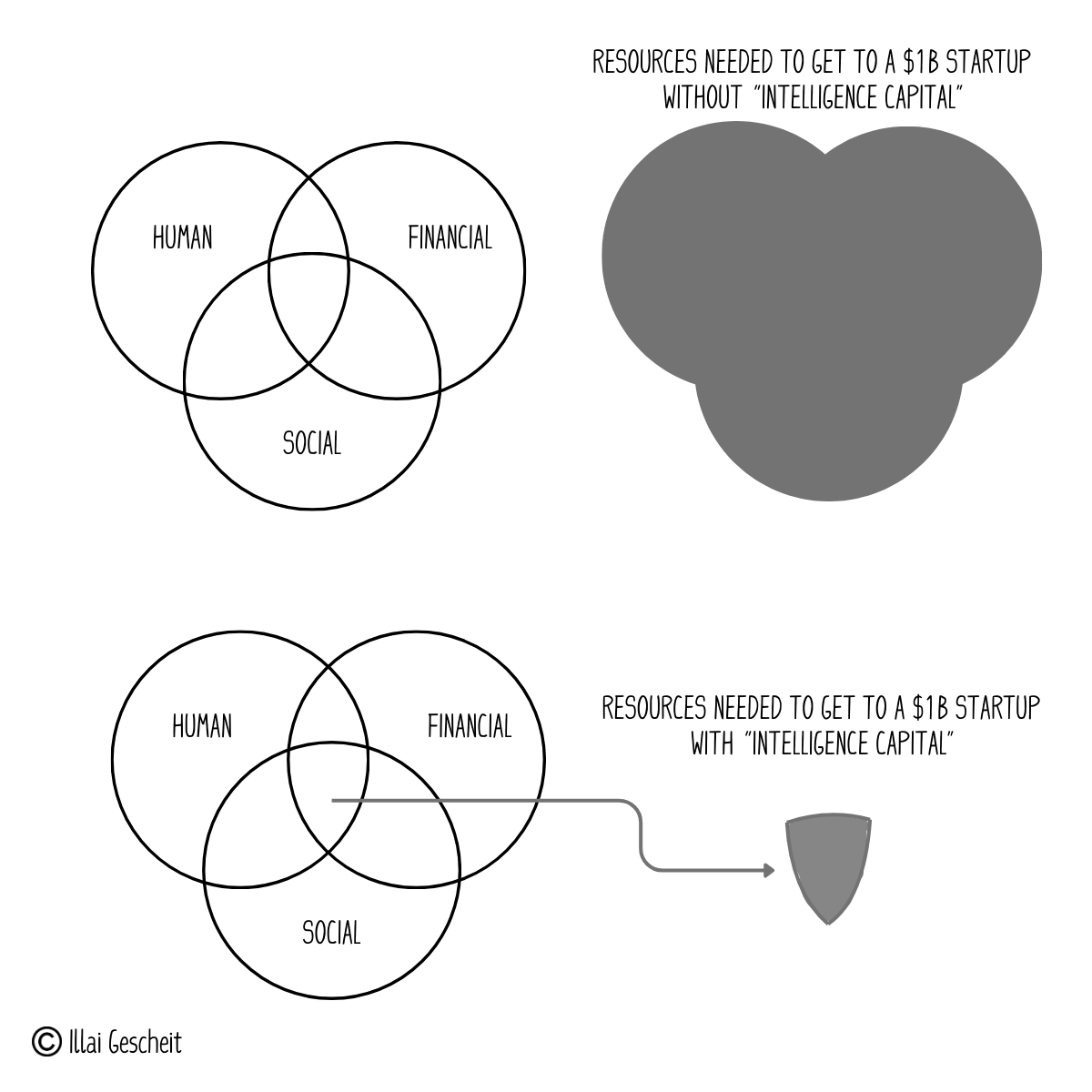
Using AI as “Intelligence Capital”, will created by bringing a very targeted and focused group of people, networks and financial resources with the intention to build a small resource of “intelligence” that will bring a significant ROI compared to the resources needed to scale the company.
How AI is eating the 3 common types of capital
In the last years, as focus on AI startups and investments grew, we see a change in this Startup Resource Flywheel and how the rise and development of Artificial Intelligence is breaking or changing the Flywheel. AI has changed the amount and type of resources founders need in order to build companies and to scale them quickly into the status of unicorns ($1B in market value) or to reach $100M ARR. Founders who are able to build (vs. raise) “Intelligence Capital”, might not need the same amount of Human, Social and even Financial Capital to scale.
Traditionally, a powerful move of a successful founder and CEO was to hire fast and aggressively. This is true both for startups and established businesses. A startup that just raised a significant capital round and got to product-market-fit, would start hiring like crazy, and grow, sometimes too fast. WeWork at its glamorous days added 12,000 employees in a matter of years, and Peleton hired over 2,000 people in 18 months during COVID. This is also true when it comes to the large tech companies who are hiring aggressively in time when markets seem to perform great and then need to let go of people to maintain budget, cashflow and sustainable business. As Andy Jassy, the CEO of Amazon wrote in the last mass layoffs of projected number of 30,000 Amazonians.
Karin Kimbrough is the Chief Economist at Linkedin, and in an interview she mentioned “We do see that jobs are changing over time. You all have heard me say this before. We see that skills are becoming more important in certain roles, and other skills are becoming less important because eventually we’re sort of expecting that generative AI is going to do them.” We see a shift that the skills of a few will replace a larger number of employees alongside “Intelligence Capital” powered by AI.
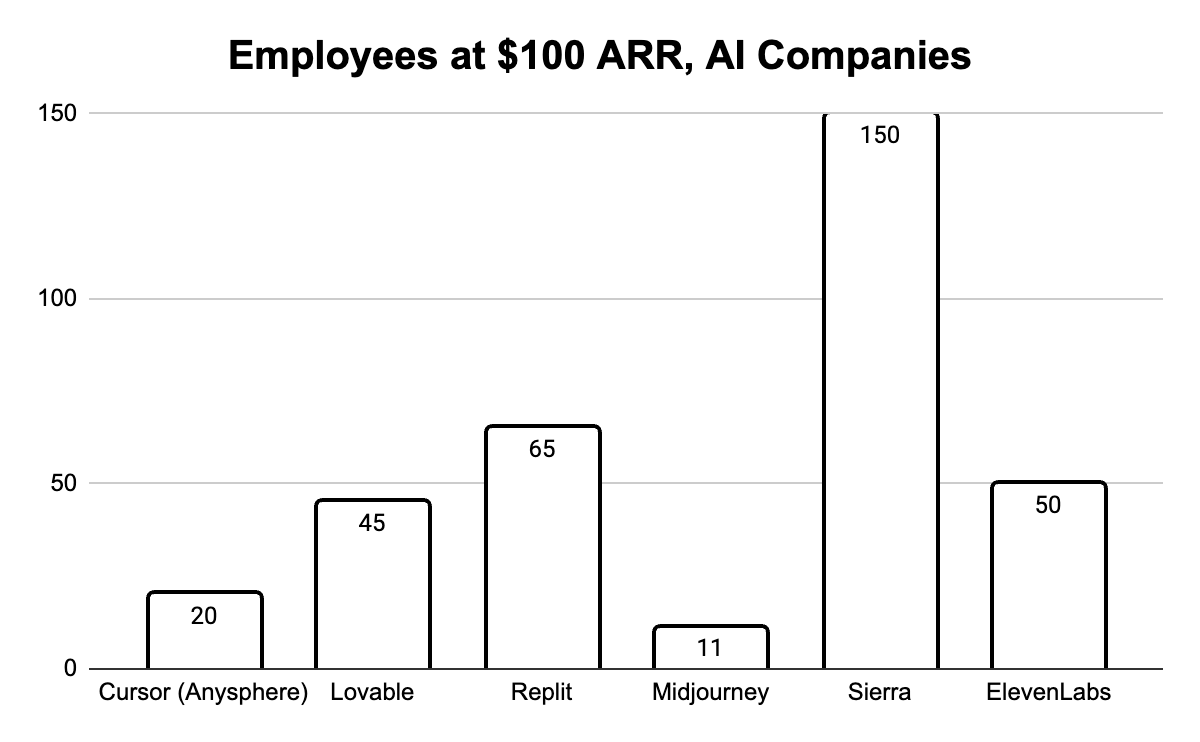
In addition, I see startups going leaner and growing faster with a few people - they are able to keep smaller investment of Financial Capital with very unique Social Capital of growth mechanisms. Companies like Cursor, Midjourney and Lovable growing quickly beyond the $100m ARR with very few people on their teams. Some of those companies reach the state of $100 ARR with an incredible number of 10-20 FTEs (Full Time Employees) in a matter of months and the bar is pushed closer and closer and getting tighter to grow aggressively with the least people on the team.
We see companies like Base 44, an Israeli 1-man show that was built by the Founder Maor Shlomo and was sold to Wix for the total amount of $80 million. Maor started building his company in public and quickly got paid users who scaled on his platform while continuing developing it on his own. His decision to continue building solo and target a sale early and grow with Wix after acquisition is the end result of different choices and outcomes of smart use of “Intelligence Capital”.
Lastly, we start seeing smaller networks of ex-OpenAI, ex-NVIDIA, ex-Google employees who are creating a new Social Capital network that brings amplified value to a company when they join companies as investors and advisors and when they are building a new fund. Niel Hoyne is the Chief Strategist of Google, and is quietly building a mega-angel portfolio of AI companies. Other AI startups CEOs are also putting their foot down and joining startups as they provide access to a very targeted network that enables building that “Intelligence Capital” which will return their investments faster than ever with higher valuations.
I have mix feeling about the Intelligent capital at some point. I am excited because the future technology will be amazing. But I am also feel sad, that company want more profit but the social gap getting wider and job market is though now. Will we trade all of this advancement with social collapse?
If I'm frank, this is too hypy of a take. Why don't you define what Intelligence Capital is in the first place anywhere in the article? It makes it hard for me te assess if it fits the category you believe it's a type of. You describe it via the function of AI, but what is intelligence capital in the first place?
Furthermore, AI is not intelligence. AI might be a new form of automation that can supercharge companies. AI perhaps is a new technology that people should understand to unlock the potential, just like internet did.