
Building Thin vs. Building Robust
How should startup founders in the early stage build

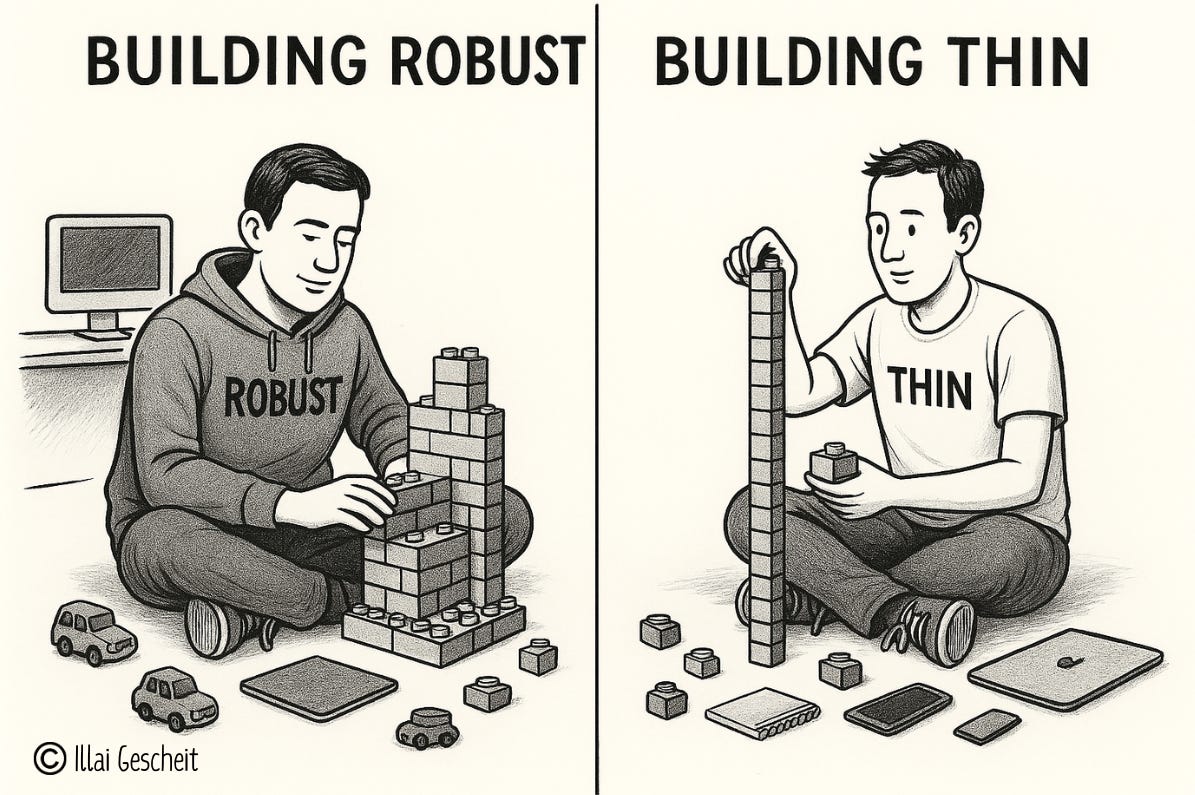
There are two ways that I have seen early-stage startup founders building their companies and products - ‘Thin’ and ‘Robust’.
When I deal with very technical founders they tend to build their technologies and product in a ‘Robust’ mode. All the infrastructure, architecture, code and models are extremely robust, sometimes even before they even startup to build any features that solve a problem for their customers and users.
They tend to insist that this is the most important element of building a product and that there will be massive technical debt later on as they scale.
That might be true, but those founders typically move slower to validate their solutions and ventures, and waste a lot of capital, time and resources building perfect tech.
The other extreme usually belongs to non-technical founders that have a business idea, and they don’t really know how to build the robust tech in the back end. They build a very lean, sometimes fragile version of the product.
The mistake many those founders do is that they scale it ‘thin’ and vulnerable without adding layers of resilience and robustness. If they don’t the path for the tech to break is short.
The best founders iterate between those two extreme approaches. They start ‘thin’ to validate their business idea, and once they get some traction, they add a layer of robustness, then scale a bit the product, add more resources and even team members to build the infrastructure of their product.
It’s an endless iteration and zig-zag between the two mindsets and approaches.
How do you build? Thin? or Robust? or in between?